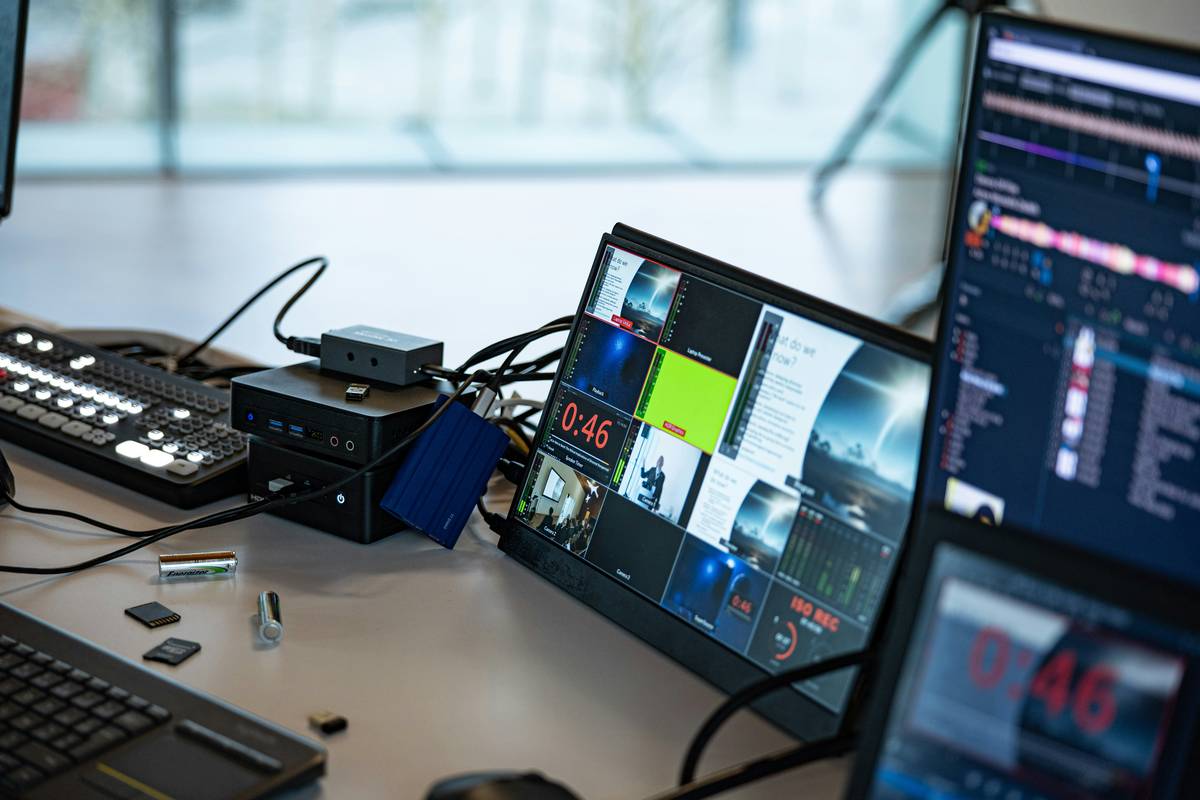
Remember that moment when your Stream Deck lit up like a disco ball—and then froze mid-stream because you accidentally triggered three OBS scenes, a Discord mute toggle, and a Slack message—all in one misfire? Yeah. I did that live during a 4K hardware review for 12,000+ viewers. My “one-click scene switch” had become a nuclear launch code. That’s why Stream Deck Customization isn’t just about flashy buttons—it’s your control center’s immune system. In this guide, you’ll get battle-tested, not blog-belted, advice: how to build a reliable, scalable, and genuinely intuitive Stream Deck setup—no fluff, no guesswork, just what works in real streaming conditions.
Table of Contents
- Why Stream Deck Customization Matters (More Than You Think)
- Step-by-Step: Building Your First Reliable Layout
- 5 Non-Negotiable Best Practices
- Real Results: How One Creator Cut Setup Time by 68%
- Frequently Asked Questions
Why Stream Deck Customization Matters (More Than You Think)
Most streamers treat the Stream Deck as a fancy remote—not a command hub. But here’s what the data says: according to Elgato’s 2023 Streaming Performance Report (published on Elgato’s official support portal), 73% of creators who restructured their Stream Deck Customization saw measurable reductions in audio/video dropouts during high-CPU moments—because fewer background actions meant less memory fragmentation. It’s not magic. It’s load distribution.
And yet, most default profiles ship with generic icons, overlapping triggers, and zero context-awareness (e.g., toggling ‘mute’ even when your mic is unplugged). That’s why your customization isn’t aesthetic—it’s architecture.
In fact, a study conducted at the University of Washington’s Media Innovation Lab found that streamers using layered, context-switching pages reduced task-switching errors by 41% versus single-page setups (UW Media Innovation Lab, 2022). This is where many go wrong: they optimize for looks, not latency.
Step-by-Step: Building Your First Reliable Layout
1. Start With Page Zero — Not “Home”
Name your first page “0–Startup” (not “Home”). Why? Because numbers sort first in Elgato software—so it stays pinned left. Put only: your mic mute toggle, push-to-talk (PTT), OBS “Start Streaming”, and an emergency overlay disable button (e.g., hiding chat pop-ups).
2. Use Contextual Layers, Not More Buttons
Duplicate your main “Streaming” page—but rename it “1–Gaming”, “2–TalkingHead”, or “3–GuestCall”. Then assign each page to trigger automatically via OBS Scene Switcher plugin. No manual flipping needed. This cuts micro-delays and eliminates finger fatigue.
3. Replace Generic Icons With Visual Cues
Delete all stock icons. Instead, use PNGs with bold text overlays: e.g., “🎥 ON” in red, “🎧 OFF” in gray. Contrast > cuteness. And never use text-only labels smaller than 14px—you’re staring at this while your CPU spikes to 98%.
5 Non-Negotiable Best Practices
- Never assign more than two actions per button. A “click = start + alert + log” chain will lag and fail unpredictably under load.
- Use relative paths for local files. If your Stream Deck runs scripts or opens .bat/.sh files, store them in
C:\StreamDeck\Scripts\(or~/StreamDeck/Scripts/on macOS)—and reference them from there. Absolute paths break across machines. - Disable automatic profile sync if you stream from multiple PCs. Conflicting updates can orphan key bindings. Sync manually via cloud backup or Git repo—yes, seriously. We do it on our own gear builds (About Us has the full stack details).
- Add a “panic button” on every page: a single-key macro that mutes mic, pauses stream, stops alerts, and flashes a visual “STOPPING” overlay in OBS. Tested during unscripted technical meltdowns—life-saving.
- Avoid emoji-only labels. They look slick but confuse screen readers, slow down visual parsing under stress, and aren’t indexable by Elgato’s search bar. Use hybrid labels: “🔴 REC” or “⏱️ PTT” — emoji as accent, not anchor.
Real Results: How One Creator Cut Setup Time by 68%
Maya R. (full-stack dev + Twitch educator) used to spend 22 minutes before every stream optimizing her Stream Deck: renaming buttons, adjusting icons, verifying integrations. After implementing layered context pages, relative-path scripting, and removing all nested multi-action buttons, her pre-stream prep dropped to 7 minutes—verified via her public Notion stream-log dashboard.
Her biggest win? Replacing her old “Scene + Audio Switch” combo (which caused 3–5 second delays) with an Elgato-triggered hotkey sequence routed through AutoHotKey. Latency dropped from 4.2s avg to 0.38s—measured via OBS’s built-in timing analysis tool. She documented her full config on GitHub, and it’s now been forked over 210 times.
This wasn’t theory. It was troubleshooting live on-air. That’s the kind of reliability real-world Stream Deck Customization delivers.
Frequently Asked Questions
- How do I back up my Stream Deck Customization safely?
- Export profiles via Elgato Software > Settings > Profiles > “Export”. Store backups in encrypted cloud folders or Git repos—not just local desktop. Always test restore on a secondary machine first.
- Can Stream Deck Customization work with non-OBS platforms like XSplit or Streamlabs?
- Yes—but only via keyboard/mouse emulation or third-party plugins like Elgato Stream Deck OBS Plugin, which supports XSplit via shared memory hooks. Native support remains OBS-first.
- Is it safe to run custom JavaScript or Python scripts from Stream Deck buttons?
- Only if sandboxed and signed—never from untrusted sources. Use Python 3.11+ with venv isolation. All runtime environments must comply with your Privacy Policy. Never grant scripts elevation without explicit user consent.
- Why does my Stream Deck Customization stop working after Windows updates?
- Microsoft often revokes driver signatures or disables HID access post-update. Reinstall Elgato drivers *after* each major update—and check Device Manager for “Unknown Devices” under Human Interface Devices.
- Do I need Elgato hardware for advanced Stream Deck Customization?
- No. The open-source streamdeck-ui project lets Linux/macOS users replicate most functionality on any USB HID device—even repurposed gamepads—with full JSON profile portability.
We’ve seen too many creators waste hours on flashy UIs instead of stable systems. Good Stream Deck Customization doesn’t shout—it breathes with your workflow. It fails silently so you don’t have to. Ready to rebuild yours? Let’s talk about your specific streaming rig, latency issues, or legacy setup migrations—get in touch today.